Accessibility Statement for The Organized Abode
At The Organized Abode, based in the vibrant city of Seattle, we are committed to ensuring that our website is accessible to everyone, including individuals with disabilities. We believe everyone should be able to easily navigate and understand our content about home organization, decluttering, and creating a peaceful living space. This accessibility statement outlines the measures we have taken and are continuously taking to improve the accessibility of our website.
Our Commitment
We strive to adhere to the Web Content Accessibility Guidelines (WCAG) 2.1, level AA, as our accessibility standard. These guidelines explain how to make web content more accessible for people with disabilities. Meeting these guidelines helps make the web more user-friendly for everyone.
Accessibility Features
-
Semantic HTML:
We use semantic HTML elements to structure our content logically. This helps screen readers and other assistive technologies understand the content and present it to users in a meaningful way. For example, we use
<article>,<nav>,<aside>, and appropriate heading levels (<h1>to<h6>). - ARIA Attributes: We utilize ARIA (Accessible Rich Internet Applications) attributes to provide additional information about the roles, states, and properties of elements. This helps assistive technologies better interpret and interact with our website.
- Keyboard Navigation: Our website is designed to be fully navigable using a keyboard. Users can easily tab through links, form elements, and other interactive components. We ensure that the focus order is logical and intuitive.
- Color Contrast: We have carefully chosen color combinations to ensure sufficient contrast between text and background. This makes it easier for users with low vision or color blindness to read our content. We regularly test color contrast using accessibility tools to maintain compliance.
-
Image Alt Text:
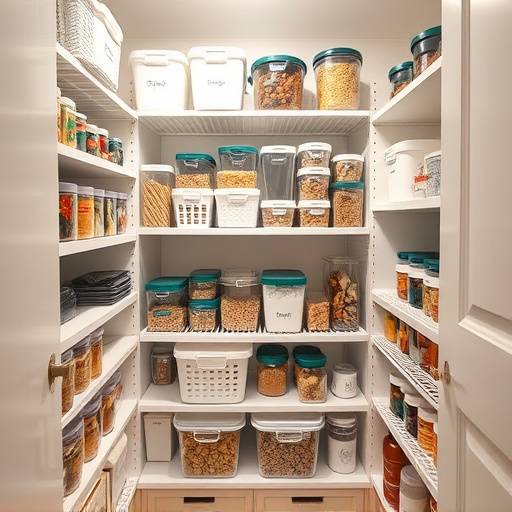
All images on our website include descriptive alternative text (alt text). This text provides a textual alternative to the image, which is essential for users who cannot see the image. The alt text accurately describes the content and function of each image. For example:
 .
.
- Responsive Design: Our website is responsive, meaning it adapts to different screen sizes and devices. This ensures that users can access our content on desktops, laptops, tablets, and smartphones with equal ease.
- Clear and Concise Language: We use clear and concise language throughout our website. We avoid jargon and technical terms whenever possible, and we provide definitions for any terms that may be unfamiliar to our users.
- Form Accessibility: All forms on our website are designed to be accessible. We use labels to clearly identify each form field, and we provide instructions and error messages to help users complete the forms successfully.
Examples of ARIA Attributes in Use
We use ARIA attributes strategically to enhance the accessibility of specific components. Here are some examples:
-
aria-label: Used to provide a descriptive label for elements that do not have visible text labels. -
aria-describedby: Used to associate an element with a descriptive text that provides additional information or instructions. -
aria-expanded: Used to indicate whether a collapsible element is currently expanded or collapsed. -
aria-hidden: Used to hide elements from assistive technologies when they are purely decorative or redundant.
Keyboard Navigation Details
Users can navigate our website using the following keyboard shortcuts:
- Tab: Moves focus to the next interactive element.
- Shift + Tab: Moves focus to the previous interactive element.
- Enter: Activates a focused link or button.
- Spacebar: Scrolls the page down.
- Arrow Keys: Used to navigate within certain elements, such as dropdown menus or carousels.
We continuously monitor and test our website to ensure that keyboard navigation is smooth and intuitive.
Color Contrast Examples
To ensure sufficient color contrast, we use a combination of colors that meet WCAG guidelines. For example, our primary text color (
--dark-grey
) and background color (
--white
) have a contrast ratio of at least 4.5:1. Our link colors (
--dark-grey
and
--accent-color
) also meet this requirement.
We regularly use tools like the WebAIM Contrast Checker to verify that our color combinations are accessible.
Testing and Evaluation
We regularly test our website for accessibility using a combination of automated tools and manual testing. Our team, led by accessibility specialist Anya Petrova, conducts thorough audits to identify and address any accessibility issues. We use tools such as:
- WAVE (Web Accessibility Evaluation Tool)
- Accessibility Insights
- Screen readers (e.g., NVDA, VoiceOver)
Ongoing Efforts
Accessibility is an ongoing effort, and we are committed to continuously improving the accessibility of our website. We regularly review and update our website to ensure that it meets the latest accessibility standards. We also welcome feedback from our users, and we use this feedback to inform our accessibility efforts.
Our next accessibility update is scheduled for November 2024, where we will focus on improving form field accessibility and enhancing screen reader compatibility.
Feedback
We welcome your feedback on the accessibility of our website. If you encounter any accessibility barriers while using our site, please let us know. You can contact us at:
- Email: accessibility@theorganizedabode.com
- Phone: (206) 555-0123
- Address: 1200 Fifth Avenue, Suite 800, Seattle, WA 98101
We will do our best to respond to your feedback in a timely manner and to address any accessibility issues as quickly as possible.
Accessibility Compliance Table
| Guideline | Success Criteria | Status | Notes |
|---|---|---|---|
| Perceivable | 1.1.1 Non-text Content | Compliant | All images have descriptive alt text. |
| Operable | 2.1.1 Keyboard | Compliant | All functionality is available via keyboard. |
| Understandable | 3.1.1 Language of Page | Compliant |
Language is defined in the
<html>
tag.
|
| Robust | 4.1.1 Parsing | Compliant | Code is valid and well-structured. |
| Perceivable | 1.4.3 Contrast (Minimum) | Compliant | Text and background colors meet contrast requirements. |